A risk register
people will actually
keep up to date.
AutoCISO helps teams identify, assess, and treat risks without forcing every stakeholder to become a risk-management specialist. Start with a guided interview, move into a live register, and make treatment decisions against a real budget.
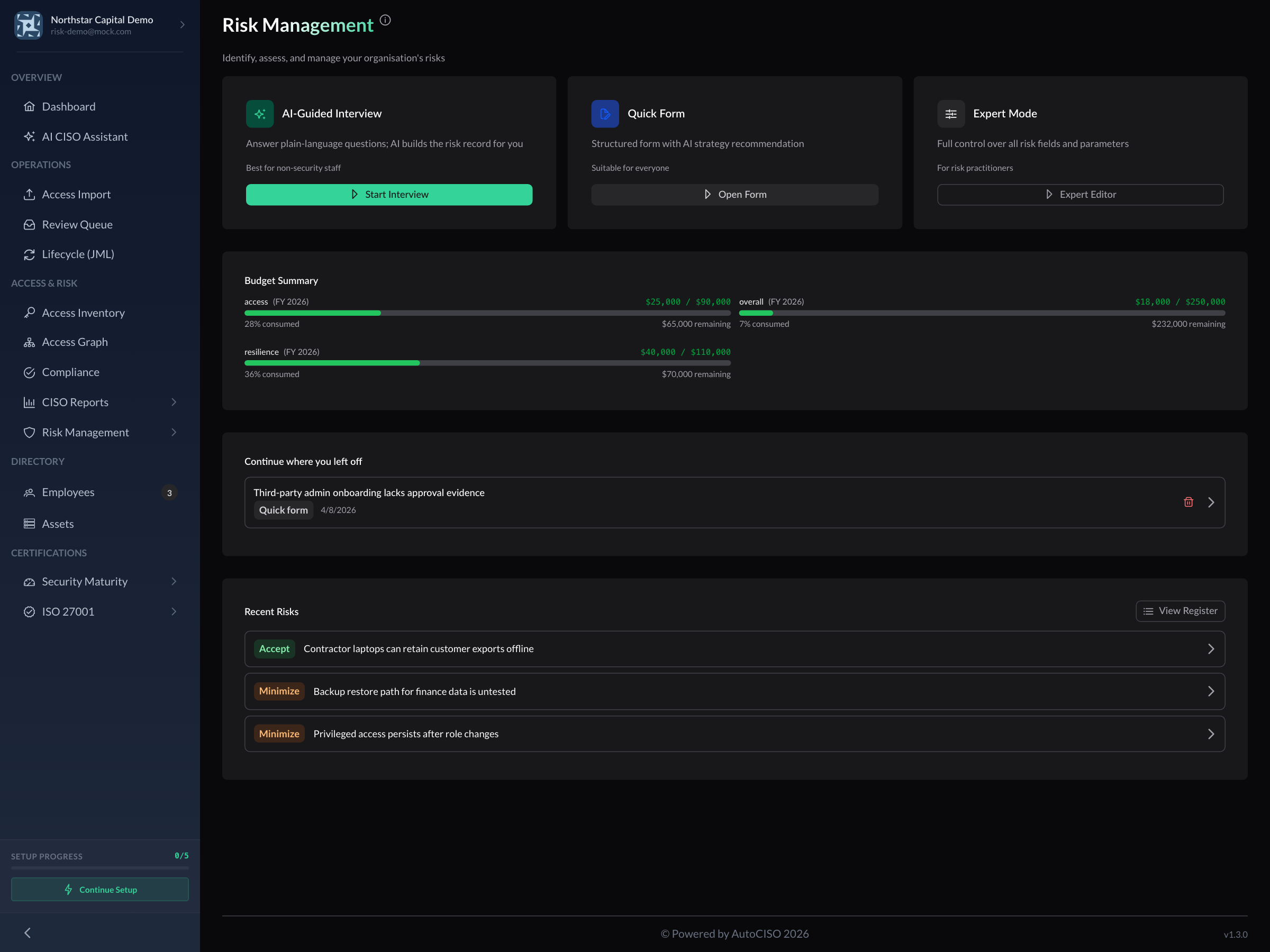
Most risk programs fail before the first treatment decision.
Risk intake is expert-only
Most programs rely on one specialist to translate vague operational concerns into formal risk language. Everyone else stays out of the process.
The register dies in spreadsheets
Even when teams identify real issues, they lose momentum in static documents that nobody updates after the workshop ends.
Treatment is disconnected from budget
Security leaders can rank risks, but they still struggle to show why one action should be funded before another.
Different stakeholders can start in different places.
The important part is not the intake surface. It is that every path writes into the same underlying risk model, so the business, engineering, and security teams are all working on the same object.
AI-guided interview
Non-experts answer plain-language questions. AutoCISO turns those answers into a structured draft instead of forcing people to speak in risk jargon.
Quick form
Teams that already understand the issue can capture it fast, preview the likely treatment path, and leave the heavy taxonomy for later.
Expert editor
Risk managers can directly control scoring, ownership, residual risk, and strategy without losing the context gathered from the rest of the business.
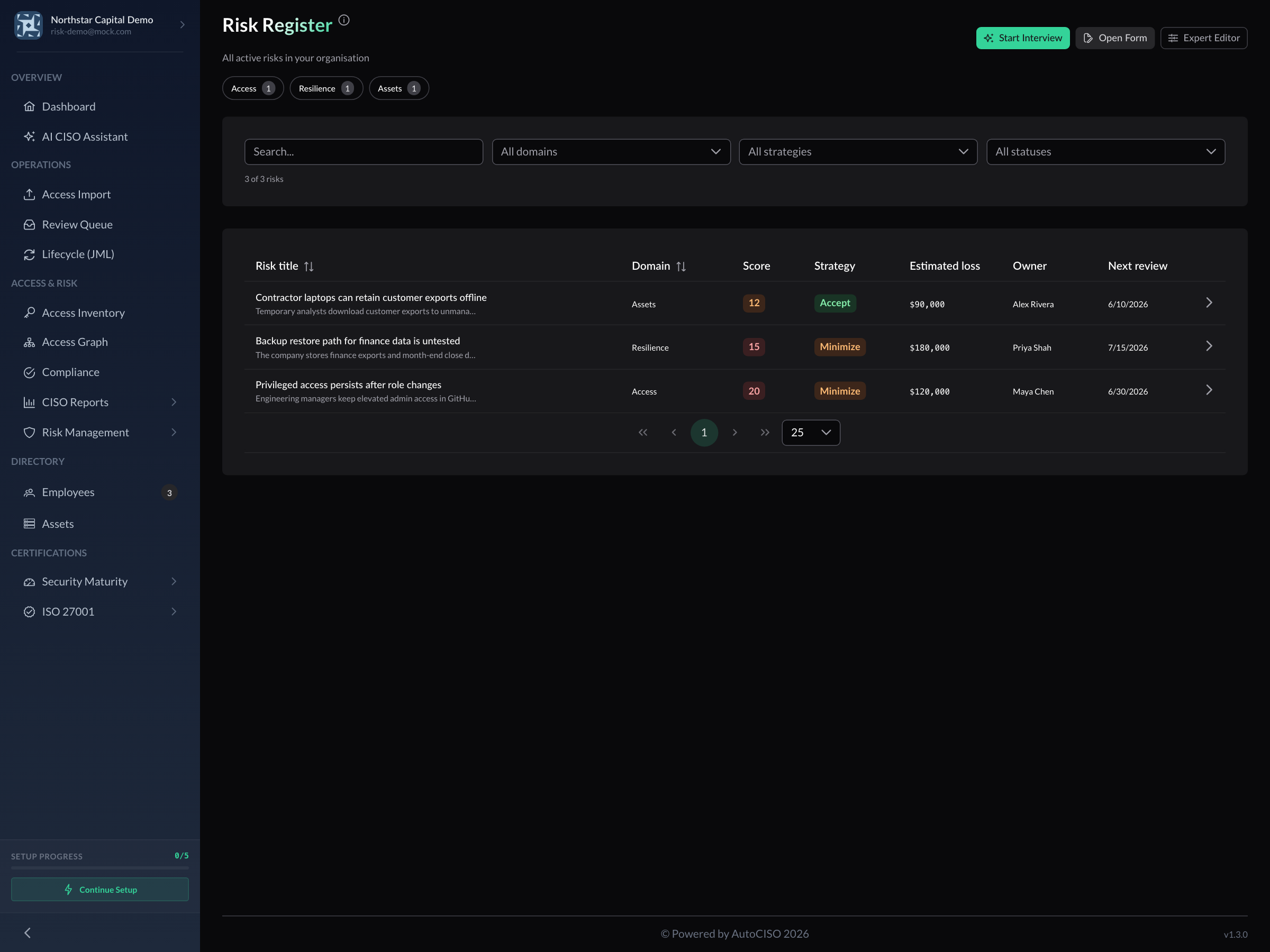
Move from intake to a prioritised operating register.
Once risks are captured, AutoCISO keeps them in a live register that can be filtered by domain, strategy, and status. That makes the register useful for weekly operations, not just audit preparation.
One canonical risk register shared across guided, assisted, and expert workflows
Resumable drafts so risks do not disappear when stakeholders get interrupted
Clearer prioritisation by domain, strategy, status, exposure, and owner
Budget visibility that links treatment choices to the money available this quarter
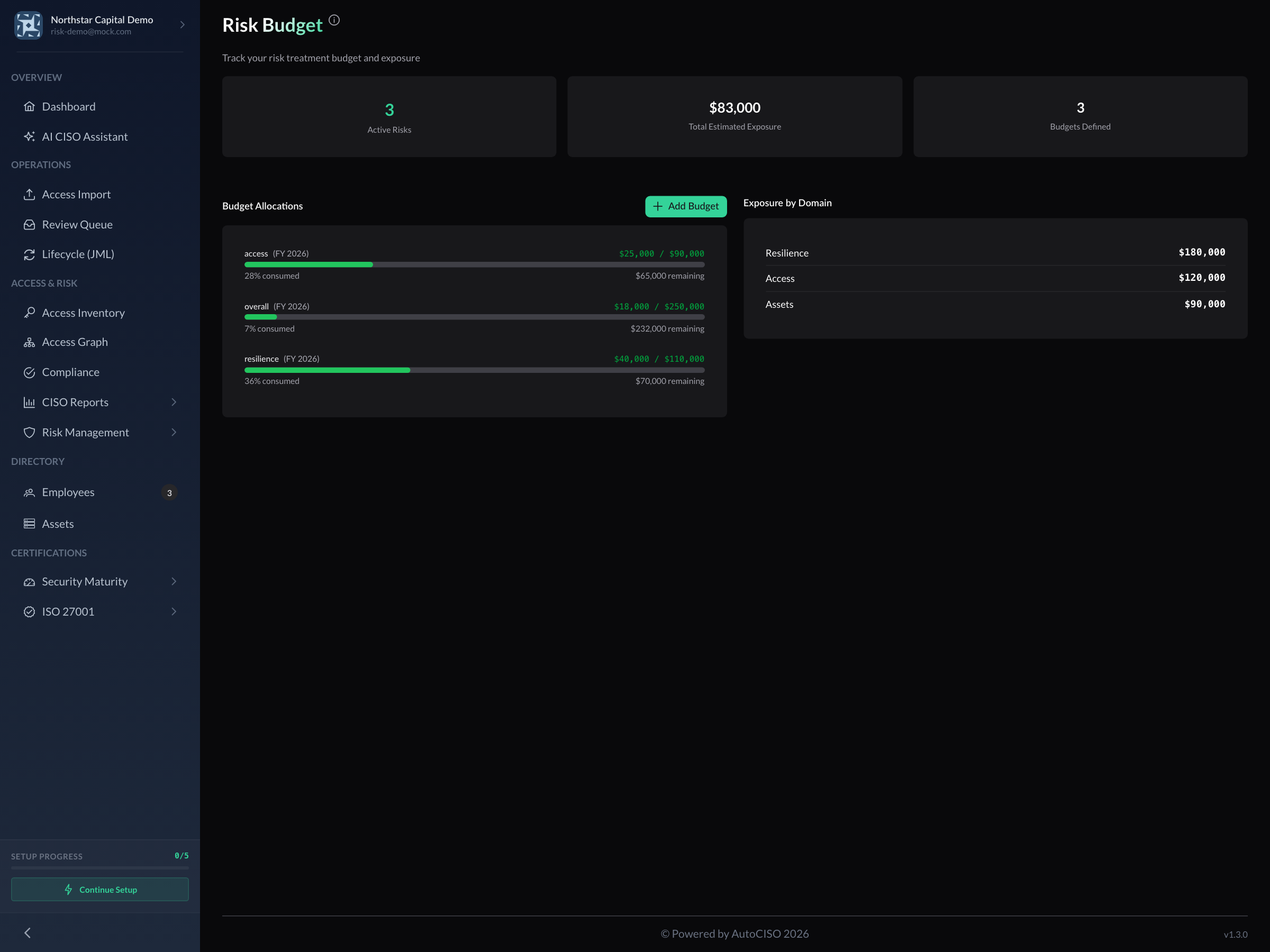
Risk treatment gets easier when the budget is in the same workspace.
Security leaders rarely struggle to find risks. They struggle to defend which risks should be treated now, which can wait, and what each choice will cost. By putting exposure and budget side by side, AutoCISO gives those decisions operational context.
entry modes feeding the same canonical record
shared budget view for treatment planning
Keep Exploring
Related use cases
Build a risk program people can actually operate.
Capture issues faster, keep one live register, and prioritise treatment with budget context instead of spreadsheet drift.